
What to Know About Cedar Fence Maintenance
Your cedar fence will change as it ages. Posts may develop checks, boards may shrink, and the warm cedar color will gradually weather. Knowing how to maintain a cedar fence starts with understanding what's normal and what needs attention.
In this guide, we'll walk you through what to expect as your cedar fence ages and the simple steps you can take to care for your fence.
Real cedar changes as it dries and reacts to Illinois weather, so some variation is expected.
A solid cedar post dries from the outside in, which can create a split along the grain called a check. Checking is normal in posts, post caps, finials, and picket tops. These checks may open during dry weather and tighten as humidity rises.
A check along the grain does not mean the post has failed. But you should schedule fence repair if a post, rail, or board cracks all the way through, breaks, or starts to come loose.
At Cedar Mountain Fence Company, we make our cedar fences from rough-sawn northern white cedar boards, so expect natural variation in the saw-cut texture, including raised grain, saw marks, knots, and slight thickness differences. Full-dimension posts may also have rounded edges, natural curves, or an occasional bark edge.
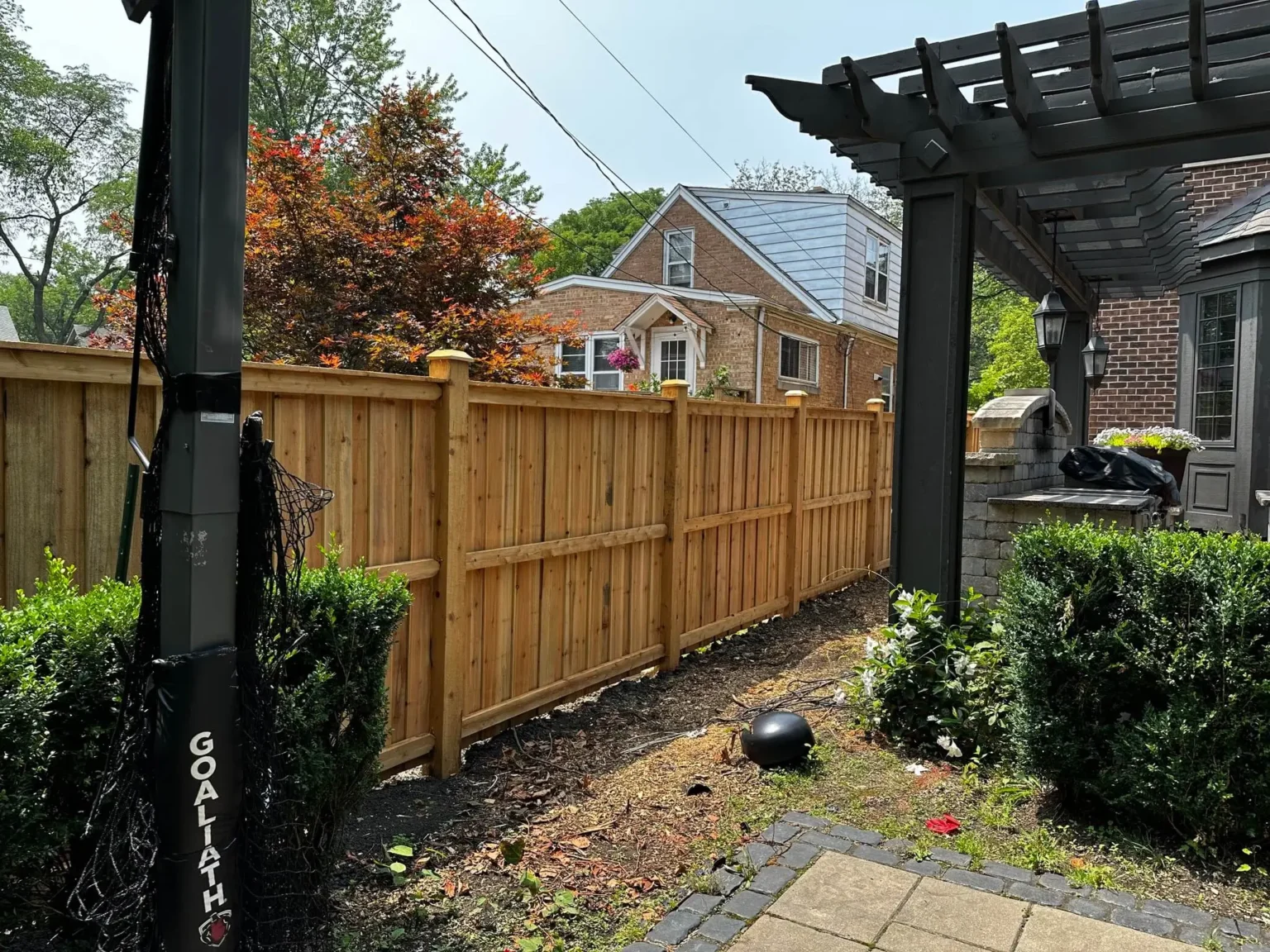
Cedar boards still carry moisture when we install them. As they dry and shrink across the grain, gaps can begin to appear between boards, especially during the first three to twelve months.
Those gaps also change with the seasons. Boards can swell during humid weather and shrink when conditions are drier, while slight cupping or bowing can occur as the wood moves. Your privacy fence will still block sight lines, but some daylight between boards is normal once they dry.
Cedar boards naturally vary in color, grain, knots, and mineral streaks, so some may look reddish-brown while others are much lighter. A new fence can look patchy at first, but sunlight and weathering help even out the overall appearance.
Left unfinished, your cedar gradually changes from its warmer honey-tan color to silver-gray, typically over roughly one to two years. This change is normal and doesn't mean the wood is rotting.
You can let your fence weather naturally or stain it to help retain its warmer color. Either way, proper care plays a role in how long a wood fence lasts.

Cedar fence maintenance is fairly simple. A few practical habits can help you care for the wood as it ages:
You can let your cedar weather naturally to silver-gray or apply a finish if you want to retain more of its warm color.
If you choose a stain or another exterior wood finish, let the wood dry adequately and follow the manufacturer's directions for preparation and application. Your product and fence exposure will determine when recoating is needed.
Checks, knots, drying gaps, rough texture, slight cupping or bowing, and natural graying are normal. Contact us when something affects the structure or operation of your fence:
Knowing how to maintain a cedar fence means understanding its natural changes and keeping excess moisture away. If something doesn't look right on a fence we installed, contact Cedar Mountain Fence Company, and we'll help you determine if it needs attention.
Planning new or replacement cedar fence installation? Request a free fence estimate, and we'll help you get started.
Ready to schedule your fence estimate? Please call us or fill out the form below to schedule your free fence estimate. We will contact you via phone or sms to schedule your free fence estimate. Thank you!
