
Quick Answer: What Illinois Homeowners Should Know
You've found the perfect fence for your backyard, but there's one detail you might not have considered. How close can you actually build it to your neighbor's property? Illinois property line fence rules aren't the same everywhere, and what's perfectly fine in Plainfield might not fly in Naperville.
At Cedar Mountain Fence Company, we've built our family business on quality work and treating homeowners right, a commitment passed from father to son. Helping Illinois homeowners plan their fences has taught us how easily an overlooked property line or local restriction can affect an installation. We're sharing that experience to help you understand the rules and avoid costly surprises.
Illinois doesn't have one statewide rule telling every homeowner how far back to build a fence. Your local municipality generally sets those requirements, which means the rules might change just a few miles down the road. These rules often include setbacks, or the minimum required distance between your fence and your property line.
The Illinois Fence Act covers construction and maintenance responsibilities for certain fences between neighboring properties. Its cost-sharing provisions generally apply to qualifying properties outside municipal limits in counties with fewer than one million residents, so don't assume your neighbor has to split the bill.
Local zoning rules determine where you can build and how tall your fence can be. Communities like Plainfield, Naperville, Bolingbrook, and Joliet each set their own requirements, with additional restrictions often applying to front yards and corner lots.
Setback and height limits can vary across Illinois communities. Here's a general starting point for planning your fence placement.
| Fence Location | Typical Setback | Typical Height Limit | Notes |
|---|---|---|---|
| Rear Yard | Often 0 feet | Commonly up to 6 feet | Property-line placement may be allowed |
| Side Yard | Often 0 feet | Commonly up to 6 feet | Restrictions may apply near the front of the home |
| Front Yard | Varies by municipality | Often lower than rear-yard limits | Height and visibility restrictions may apply |
| Corner Side Yard | May require a setback | Varies by municipality | Additional street-facing restrictions may apply |
Keep in mind, these are general examples, not statewide limits. Your town’s zoning rules will be the real deciding factor on what’s allowed for your property.
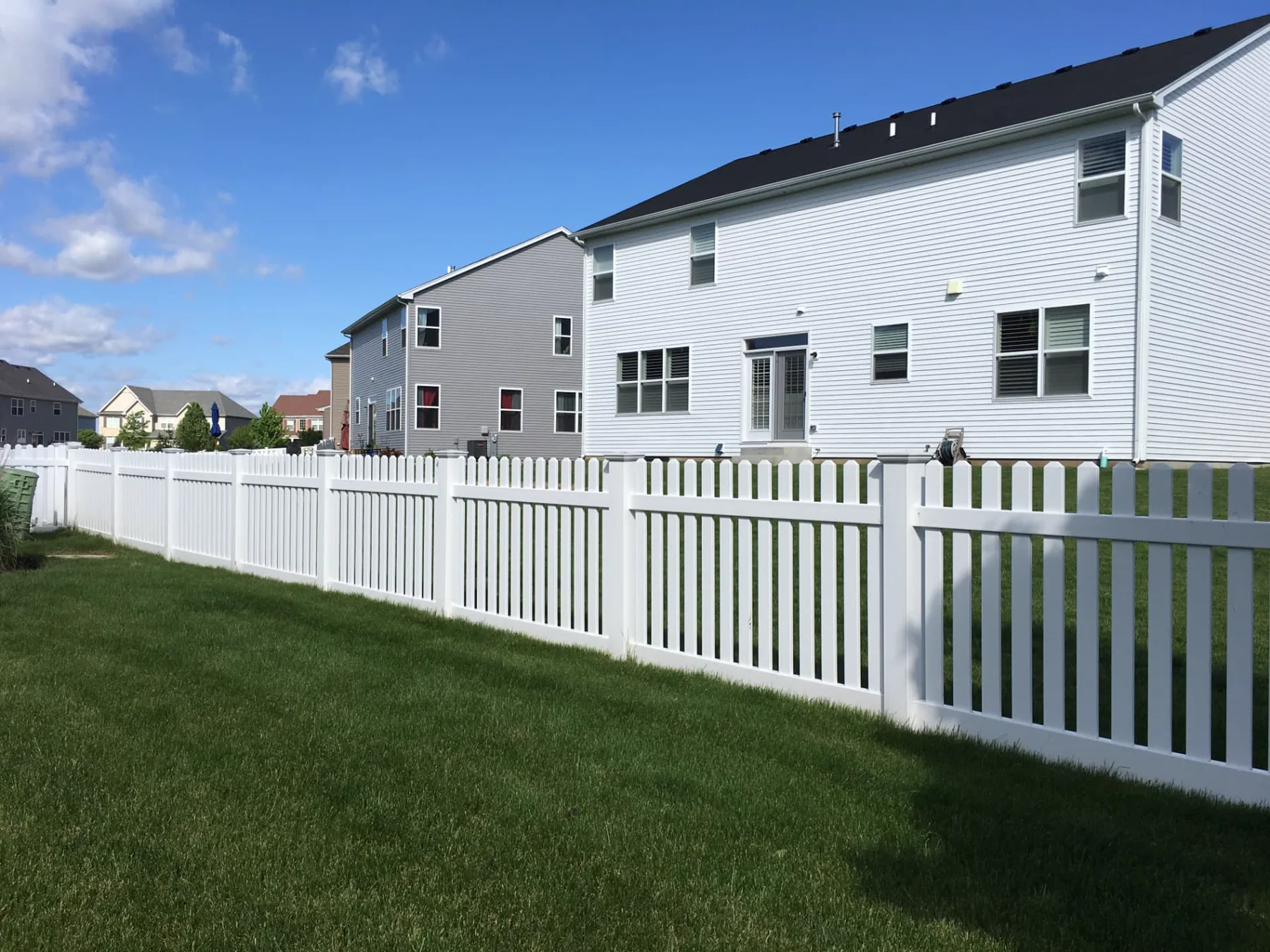
Many Illinois communities allow rear and side yard fences right up to the property line, helping homeowners make the most of their outdoor space. For example, Naperville fence regulations generally allow fences up to six feet tall along these boundaries, with some location-specific restrictions.
Even with a zero-foot setback, fence posts and footings need to stay within your property. Since an existing fence isn't always an accurate boundary marker, we ask homeowners for their property survey before moving forward with installation.
Front yard fences often face lower height limits because they sit closer to streets and driveways. A tall fence near an intersection or driveway entrance could block a driver's view of approaching traffic, which is why municipalities often restrict these locations.
Corner lots can be especially tricky because fences along the street-facing side may face different restrictions than those in the backyard. Public rights-of-way can also extend beyond the sidewalk, further limiting where you can build.
You may be able to build directly on a shared property line, but ownership and maintenance can get tricky. Even if both neighbors use the fence, that doesn't automatically mean they'll share the installation or repair costs.
Illinois doesn't require you to notify your neighbor before building a fence on your property, but local rules may differ. If you're building on the boundary, discuss ownership and maintenance with your neighbor and put any agreement in writing. Keeping the fence on your side may be simpler if local rules allow it.
Before digging the first posthole, you'll need to find out whether your town requires a fence permit. Requirements vary across Illinois, and some communities ask for a property survey or site plan showing exactly where the fence will go.
Homeowners may also need approval from their homeowners association (HOA), even if the proposed fence meets municipal requirements. These are separate approvals, so getting one doesn't necessarily satisfy the other.
Skipping a required permit could mean paying to change or remove your fence. When planning a fence installation, our team helps you work through municipal permits and HOA paperwork so you know what's needed before work begins.
That six-foot privacy fence you've been picturing may fit your backyard perfectly, but local rules still determine where it can go. Some towns restrict fence height or materials, while a fence that crosses your neighbor's property line can create a much bigger problem than a blocked view. Fences built specifically to upset neighbors may also lead to disputes, depending on the circumstances.
At Cedar Mountain Fence Company, our privacy fences help homeowners create a more secluded yard while accounting for property boundaries and local requirements.
A few overlooked details can delay your installation or force changes to your fence layout. Watch out for these common mistakes:
Understanding Illinois property line fence rules helps you avoid costly mistakes before installation. At Cedar Mountain Fence Company, we start with a face-to-face estimate, measuring your yard and discussing the fence you have in mind. We'll also guide you through the survey and permit process so you're ready for installation. That personal approach has helped our family business earn homeowners' trust and referrals for over 30 years. Schedule a free fence estimate today to get started.
Ready to schedule your fence estimate? Please call us or fill out the form below to schedule your free fence estimate. We will contact you via phone or sms to schedule your free fence estimate. Thank you!
